
Construction Stage Inspections in NSW Stages, Checks, and Purpose
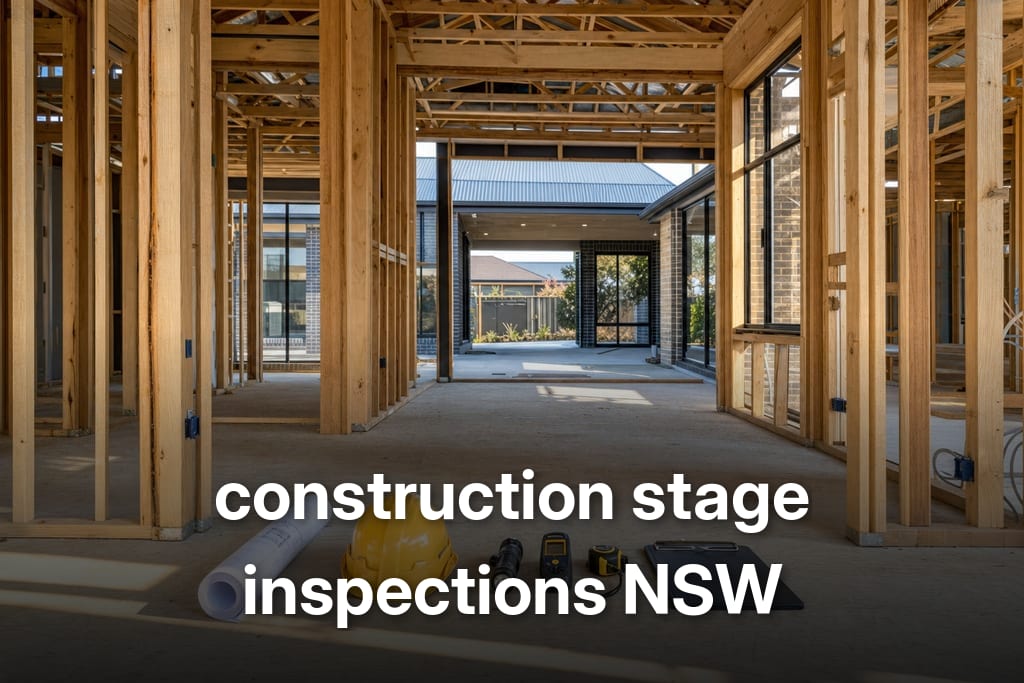
Construction stage inspections in NSW are independent checks of workmanship and construction quality at key points of a build, carried out before the work gets covered up. That timing is the whole point. Steel goes under concrete, framing disappears behind plasterboard, and waterproofing ends up under tiles, so by the time a new home looks finished, most of what matters is out of sight.
The usual points are slab, frame, lock-up and fixing, then a final look at handover. Each one lines up with a stage where something is about to be sealed in, which is the last practical chance to look at it without cutting anything open. Owners building in Little Bay, the Eastern Suburbs or out through North West Sydney use these inspections to get a written, photographed record of what the work looked like at each stage.
What a Stage Inspection Is and Who Does What
On a residential build in NSW, a certifier may be involved at points in the approval process, checking the work against the development consent and the conditions of approval. That role sits on the approval pathway, not on your side of the fence, and is separate from an inspection you engage independently.
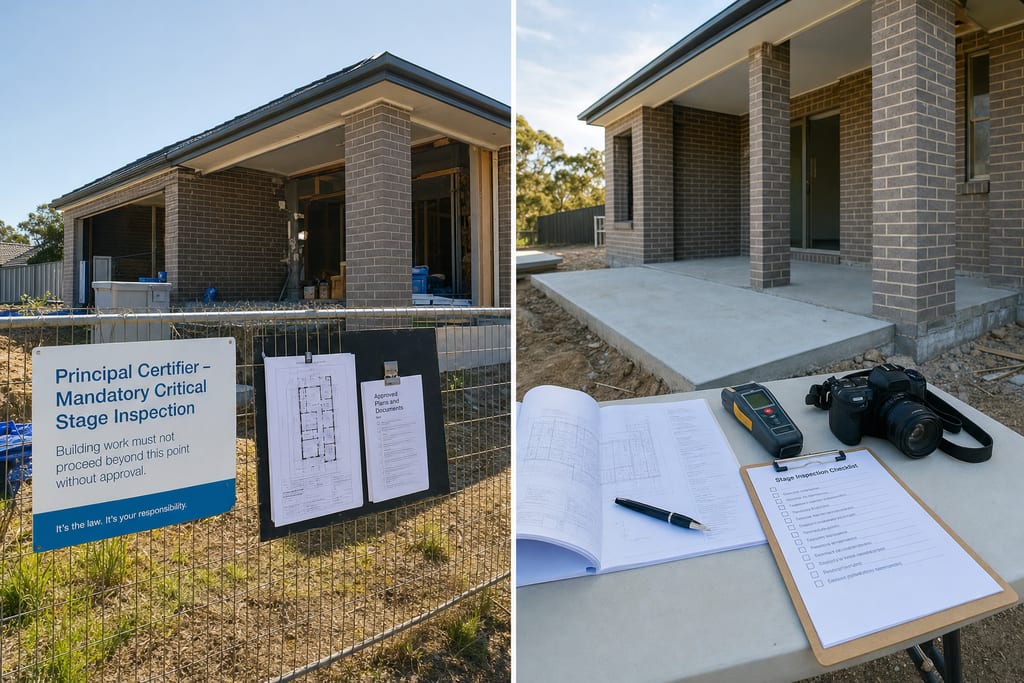
An independent stage inspection is something you engage yourself. It is a visual check of construction quality and workmanship against the approved documents and accepted trade practice, with photos and written comments. It is not a certification, an approval, or a sign-off of any kind.
Stage names and the number of stages are set by your building contract, so read the stages listed in the contract and the approved plans before you book anything.
Certifier visits: tied to the approval pathway
Owner-engaged visits: triggered by your contract stages, result in a defect report
Scope: approval compliance versus workmanship and build quality
Who pays: owner inspections are booked and paid for separately
Owners usually time their inspections to the progress payment claims in the contract, so the work can be looked at before the invoice is paid. The same approach applies at the end, where new home inspections cover the handover stage.
Slab Stage Checks Before the Concrete Is Poured
The base or slab stage inspection happens while steel, formwork and services are still sitting open on the ground. Once concrete is poured, the slab is a permanent record of whatever was underneath it, and nothing short of coring will tell you otherwise.
The visual review covers formwork set-out, reinforcement placement, bar chairs, mesh laps and cover where these are visible and reasonably accessible. The vapour barrier gets a look too, including tears, taping and the way penetrations have been sealed around pipework. Service penetrations and plumbing positions are photographed while they can still be shifted.
Site drainage, cut and fill, and whether the set-out broadly matches the approved documentation also get checked at this point. Engineering design, certification and calculations stay with the project engineer, not the inspector.
Items an owner can confirm were reviewed before the pour is booked:
Reinforcement, laps and bar chair spacing where visible
Membrane condition and sealing at penetrations
Pipe and conduit positions against the plans
Edge formwork, set-out dimensions and site drainage
Booking needs to happen as soon as the steel is laid, because the pour is often scheduled only a day or two later.
Frame Stage Checks While the Structure Is Open
Frame stage is the last clear look at the skeleton of the house, before insulation, plasterboard and cladding cover it. Wall frames, lintels, bracing, tie-downs, strapping and truss fixing and support are all reviewed where they are visible.
A lot of frame-stage findings come from other trades rather than the carpenter. Plumbers and electricians notch and drill studs, top plates and bottom plates to get services through, and over-cut members are common. Missing or partly driven fixings on bracing panels show up regularly, as do truss members left without proper support.
Straightness, plumb and alignment also matter here, because a bowed stud or a wall out of plumb turns into wavy plasterboard and gaps at skirtings later.
Common frame-stage findings and what they lead to:
Missing bracing fixings, which reduces the bracing the design relied on
Over-notched studs, which can weaken the member at that point
Unsupported truss members, which can show as ceiling cracking
Out-of-plumb frames, which show in finished wall and tile lines
Lock-Up and Waterproofing Before Linings Go On
Water problems in new Sydney homes usually start at details that get covered within days. The lock-up and pre-lining window is the only practical chance to photograph roof coverings, flashings, sarking, gutters and downpipes, and window and door head and sill flashings before they are hidden.
External cladding junctions, weatherproofing details and clearances between finished surfaces are reviewed at the same visit. Inside, insulation placement and service rough-ins are checked before the plasterboard is fixed.
Wet areas get their own look before tiling starts, covering membrane application, bond breakers at junctions, falls towards floor wastes and the shower hob or step-down detail. Membrane work has to suit the manufacturer's instructions and the approved documentation for that build, and those documents may need to be reviewed as part of the inspection.
Worth having photographed before tiling is booked:
Membrane coverage, turn-ups and bond breakers
Floor falls to wastes and shower step-down
Window and door flashings at heads and sills
Sarking, roof flashings and downpipe connections
Fixing Stage Checks Before Practical Completion
Fixing stage is where surface quality problems get expensive to fix, because repairs mean pulling apart work that is already finished and painted. The review covers plasterboard setting, cornice, skirting, architraves, door and window hardware, and cabinetry alignment and support.
Tiling gets close attention at this point, including lippage, grout finish, silicone at internal junctions and shower screen fit, along with water test observations where that is possible on the day. Paint finish, visible gaps, damaged surfaces and incomplete trade work are listed with photos. Outside, paving falls, thresholds at external doors, drainage and site works are looked at.
This visit is not the same as a handover inspection. Stage checks happen while trades are still on site and able to come back to a room, while handover happens before keys change hands.
What makes a fixing-stage report usable for the builder:
Each item tied to a room and a location
Photos showing the defect, not the general area
Plain descriptions the trade can act on
Items separated from normal incomplete work
A clear, photographed list gives the site supervisor specific jobs to allocate, which is a different conversation to a general complaint about quality.
Every Stage or Only the Critical Ones
Booking all four visits gives you the fullest record, but it means getting an inspector on site at short notice whenever the builder's program moves. That suits owners on a custom build, anyone already unhappy with the workmanship, and investors who will not walk the site themselves.
Two visits is the leaner option. Slab and pre-lining are the points where work disappears for good, so if the building inspection cost is what is driving the decision, spend it there. It is the wrong pick if finish quality is your main worry, because tiling and cabinetry problems will not show at either visit.
Full coverage: every stage photographed, tightest scheduling
Slab and pre-lining only: concealed work recorded, finish defects missed
One fixing-stage visit: no record of anything already covered
Whichever you choose, these are visual checks of work that is reasonably accessible on the day, so concealed or inaccessible items may not be identified. Act on what the report does find. Raise items in writing while the trade is still on site, because a defect flagged at frame stage is a conversation with the supervisor, and the same defect at handover is a dispute.
Get the Stage Dates From Your Builder This Week
Ask your site supervisor for the program dates on the next few stages, and push for the pour date and the plasterboard date in particular. Those two move the most and give the least notice. Once you have them, book the inspection a few days ahead so the inspector gets on site while the steel or the frame is still open, not after the sheets are up and the progress claim has been paid. Building Inspections Sydney is at 302/7 Jenner Street, Little Bay, NSW 2036, and inspects builds across the Eastern Suburbs, Sutherland Shire, Inner West, Parramatta and Greater Sydney. Call 1800 557 100 or request a quote through the website.
Need an independent building inspection in Sydney? Request a quote from Building Inspections Sydney and we’ll help you choose the right inspection for your property or building issue.
Stage Inspection Questions From Owners
Does my builder have to let an independent inspector onto the site?
Not automatically. Site access during construction is usually governed by your building contract and the builder's site safety obligations, so check the access clause before you sign. Many contracts allow an owner and their consultant on site at agreed times with notice. If your contract is silent on it, raise access with the builder early and confirm the arrangement in writing.
What can I do if a stage I wanted checked has already been covered up?
You can still have the work looked at, just with less to see. An inspector can review what remains visible, check the finished surfaces for signs of problems underneath, and look at any photos, certificates or approvals the builder holds for that stage. Ask the builder for their own progress photos. Opening up covered work is a decision for you and the builder, not a standard inspection.
What happens if my builder disagrees with items in the stage report?
Disagreement is common and does not make the report useless. An independent report sets out what was seen, with photos and the reason the item was raised, so the builder can respond to each point in writing rather than in a phone call. If items stay unresolved, that written exchange becomes the starting record. For your rights and next steps, get advice from a lawyer who handles building matters.
Can I book a stage inspection on an off-the-plan apartment I am buying?
Usually not during construction, because you do not own the lot yet and the developer controls site access. Most off-the-plan buyers have their first real look at settlement, which is when a pre-purchase apartment inspection applies. Building Inspections Sydney carries out apartment inspections across the Eastern Suburbs, Sydney CBD and Greater Sydney. Call 1800 557 100 to talk through the timing on your contract.
Comments